











the literary voice of goth
“Like Raymond Carver through Goth-coloured glasses” said the Sunday Times when Susan Compo’s story collection Malingering was first published. With the Goth subculture of the 1980s/90s currently experiencing a resurgence of interest, the time is ripe to rediscover her stories. Compo writes with wit and compassion but also brutal honesty, capturing in her fiction the exhilaration and the despair of those years, the desires and foibles of its protagonists. What makes her stories exceptional, though, is the way the reality they detail so sharply is shot through with a curious dyed-black magic . . .

a classic of documentary photography
A new edition of Lucy Sante’s revelatory monograph, with 130 images and a new afterword. Sante makes a compelling case for the “real-life photo postcards” produced in their millions in small towns on the plains and in the hills of rural early 20th-century America as a medium of expression comparable to the folk music being made in the same places at the same time—open to the unvarnished experience of life, and enacting tradition even as they embody modernity. The "vast, teeming, borderless body of work" constituted by these postcards, she argues, adds up to a "self-portrait of the American nation."
More from a north american surrealist
Jeff VanderMeer coined the term “North American Surrealism” to describe the work of Robert Freeman Wexler, whose haunting new novel, The Silverberg Business, was recently published by Small Beer Press. We highly recommend it, along with his earlier novel, The Painting and the City, whose protagonist, sculptor Jacob Lerner, slips back and forth between 21st-century New York and Manhattan in the 1840s in a surreal fantasy that offers sharp insights into the clash of art and commerce and capitalism’s destruction of the natural world, culminating in a vision of how art might help regenerate the earth.
Tereza Riedlbauchová’s passionate poems
explore the thresholds of bodies and the boundaries between the physical world and the imagination. The desire to cross these borders and merge with another being animates every page of Paris Notebook; her deceptively spontaneous poems evoke moments of physical and emotional intercourse while seamlessly shifting perspective and setting. Grounded in the great cities of Europe, yet universal in their emotional scope, these poems are central to the work of one of the major contemporary Czech poets. A bilingual edition with expert English translations by the Prague-based American poet, Stephan Delbos.

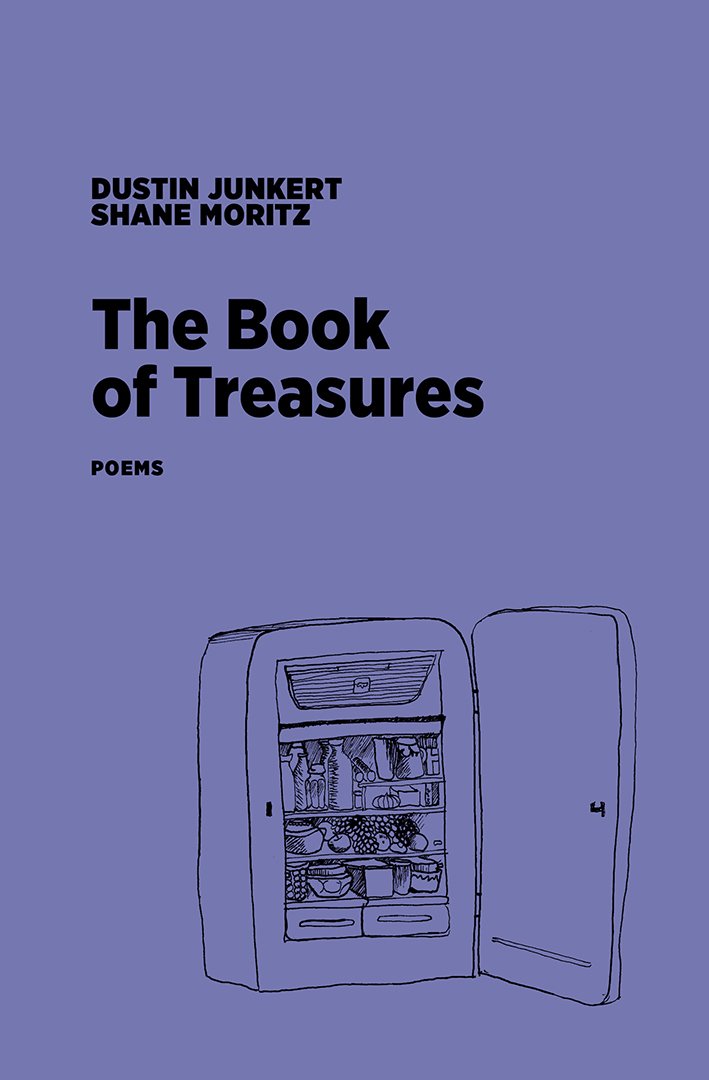
Towards a Poetry of the Absurd
Dustin Junkert and Shane Moritz’s collaborative poems drag the compositional practice of Exquisite Corpse kicking and screaming into the 21st century. Their subjects are projectiles of varying gravity launched at a Ouija board planchette; the scenarios they unfold describe a universe of pop-culture misunderstandings. Somewhere at the intersection of David Berman, Anne Sexton, Robert Pinsky, and Stephen Malkmus lies the lyrebird glory of these poems, their impact amplified by David Nichols’s drawings, whose air of tender perplexity provides a perfect emotional accompaniment.
return of a legendary rock history
The definitive book on Australian punk and post-punk music, reissued in an expanded new edition with 175 photos. Stranded offers the inside story of the emergence of the Saints, the Birthday Party, the Laughing Clowns, the Go-Betweens, Nick Cave, the Moodists, the Scientists, and many more great Australian bands, told by a writer who witnessed it all first-hand. Clinton Walker “writes not only of the musicians, but also of the venues, the promoters, the record stores and the community radio stations that together carved out a space within culture where it could turn back on itself and become an art.” (McKenzie Wark)